AI Predicted Difficulty gives you insight into how a workout is expected to feel. AI Predicted Difficulty is based on your recent training, recovery, and fitness level. This prediction helps you set expectations, pace properly, and make better decisions around fueling, rest, and training.
What Is AI Predicted Difficulty?
Every workout in TrainerRoad includes a predicted difficulty rating. This rating is calculated using TrainerRoad AI’s understanding of your fitness and fatigue, including:
- Your recent performance in each training zone
- Accumulated training load
- Recent workouts, skipped rides, and added volume
- Recovery needs and upcoming training demands
Where You’ll See It
Every TrainerRoad workout has an AI Predicted Difficulty. You can view a full breakdown of a workout's AI Predicted Difficulty when you select a TrainerRoad workout. You can also see a preview of the most likely RPE for that workout in the workout card for a scheduled workout on your Calendar.
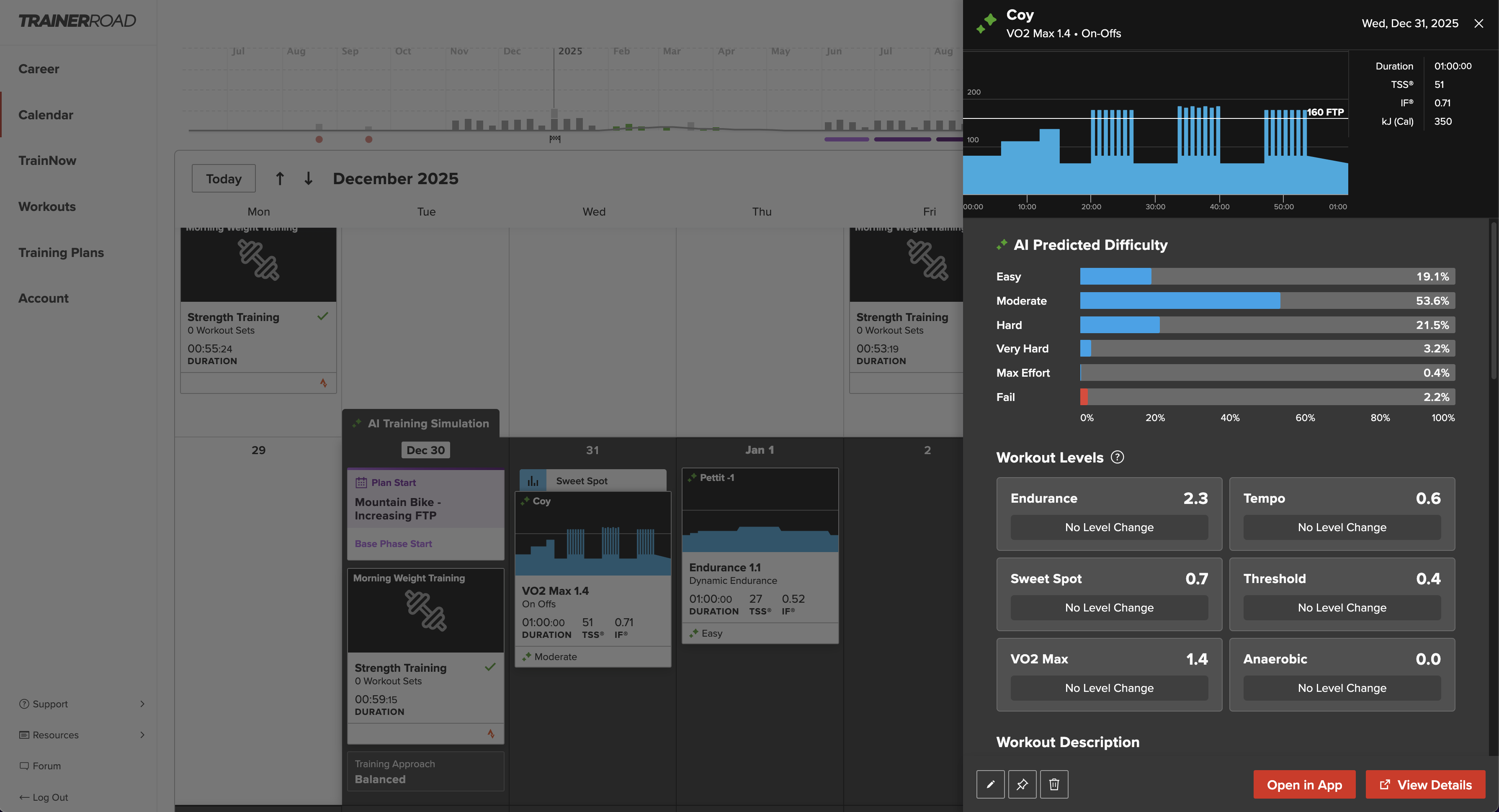 _For this athlete, Coy is predicted to be a moderate effort. _
You’ll see the predicted difficulty for any given workouts as one of six levels:
- Easy
- Moderate
- Hard
- Very Hard
- Maximal Effort
- Fail
This prediction is personal. Two athletes with the same workout on their calendar can see different difficulty ratings based on how prepared they are to complete it and what training they have done recently.
If a workout is predicted to feel Maximal Effort, but it’s not intended to be a key training session, that may be a sign that TrainerRoad AI is accounting for recent fatigue.
Does This Affect My Training?
AI Predicted Difficulty is informational. It doesn’t change your workout or plan by itself. However, it’s often used alongside other AI tools to help guide adjustments.
If a workout looks harder than you feel like you can do today, you can swap it out for a Workout Alternate with a lower predicted difficulty! You can also use the prediction to help manage pacing, nutrition, and recovery in advance of the scheduled workout.